Showing posts with label do. Show all posts

Apple Tree: Disappearing Song and Memory PowerPoint

Happy Thursday everyone!  It was an amazingly beautiful day today here in Colorado so my two kiddos and I scooted (okay, they scooted and I walked) to our local park, we had frozen yogurt and played outside the majority of the day.  It was awesome!

But this morning I did finish a file that I started yesterday.  I had to take a break from la songs and made a do disappearing song PowerPoint.  Again, this is set up similarly to the previous files I've made.

This one is for Apple Tree (this song is a gem!)

First, they'll track the beats by pointing to the apples as they sing the song:

Next, they'll clap the rhythm of the song as they sing the text:

Then we'll sing it on rhythm syllables:

Then we'll add the bar lines and meter:

We'll move on to singing the song on solfa:

After that the apples fall from the tree. Really, they do!  With the animation they actually fall and bounce and land by the tree.  They start off falling one by one but then they start falling by twos:

In this slide, all the apples fall and they sing the whole song from memory:

Then, we'll wrap it up by singing the text of the song one more time:

And I would then transition them into the game:

This is available at my Teachers Pay Teachers store! :)

Remember, if you're in Colorado, that Susan Brumfield's workshop is on Saturday!!!  Don't miss it!  Hope to see you there!!!
0

Acka Backa

In recent years, this singing game has become an all-time favorite of my students.  They ask to sing and play it ALL the time.  The game comes from this book:

It's published by the National Youth Choir of Scotland.  There's also a version of the book for younger students and a version with singing games for older students.  I am the proud owner of all three books.  They are GEMS!  While they contain a lot of the singing material I already own, they have different activities for them and the kids eat them up.  They are WELL worth you money!

Here's the song:

And here's the game from the Singing Games book:
Game 1:
In a standing circle, the class sings the song while passing a playground ball to the beat.  The student that gets the ball on the word “you” is out and sits down where they are.  Play continues until on student is left.  ** Note, students sit down in their spot which means as students are eliminated they must toss the ball over the seated students heads.  In order for this to be successful you must carefully and proactively prepare your students for this activity.  It’s tricky, but they LOVE it!!!

And here's another way to play it:

Game 2::
In a seated circle, class sings song while teacher walks around inside of circle pointing to one student per beat.  The student pointed to on the word “you” moves to an instrument to play the chord bordon.  Game repeats, and next student chosen moves to the first instrument as the first student rotates to a new instrument.


Here's a PowerPoint that I created to prepare and practice the rhythmic and melodic concepts of the song.  If you haven't noticed (and I think I've said this before) I structure my PowerPoints the same each time.  Generally, rhythm is first (not always the case, my sequence dictates this, but generally the rhythm is accessible) then melody.  But before these are the title, lyric and beat slides.

Title slide:
 Lyric slide:
 Beat slide:
 Rhythmic preparation slide:
 Ta & ti-ti practice slide, rest preparation slide:
 Full rhythm practice slide (stick only, this is also written out in stick notation with note heads):

Then, there are the melodic slides.  These samples of the preparation slides for do:
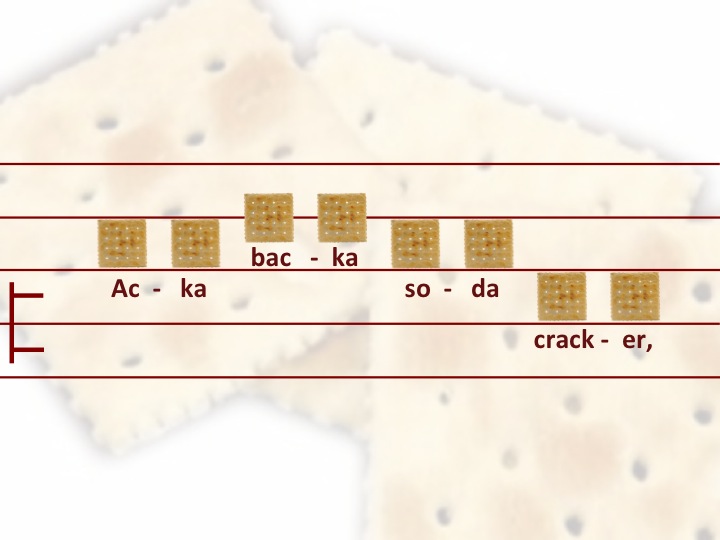
 Visual representation of iconic notation with text:
 Iconic notation with solfa:
 Iconic notation on the staff with text:
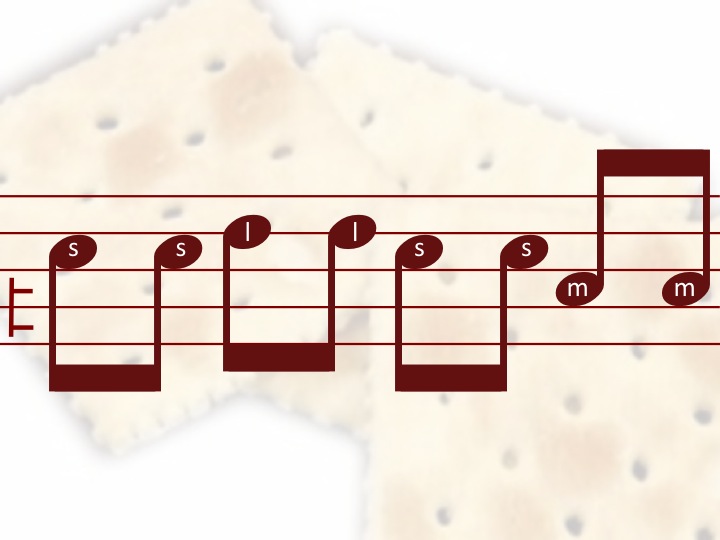
 Iconic notation on the staff with solfa:
 These next two slides highlight the critical attribute of do: it's lower than la, so & mi and it's a skip below mi.

 Then, all of the preparation slides are gone through AGAIN but this time do is labeled:


 And then we move from iconic to symbolic representation (or as the students call it, the "real" notes):

 And then onto absolute pitch names (I generally start teaching these in third grade and I start with mi-re-do on B-A-G):


This PowerPoint can be found in PDF form on my Teachers Pay Teachers store.  

I hope you all have a GREAT week!
0

Valentine, Valentine

"Valentine, Valentine" is a song that I use with both 1st and 2nd graders in February.  With first graders, it reinforces the rhythmic concepts that we've already covered but also prepares/practices so-mi (some years we've presented and are practicing so-mi by February and sometimes we're not.  This depends on many things: how often I saw them in kindergarten (strong foundation laid?); how often I see them in first grade (right now I'm on a 4-day rotation so they basically get music once a week); and the overall skills of the kids.  Some classes "just get it" earlier.  So, while I have a yearly plan, the kids and their skills sometimes make me "tweak" my plans to their needs).  With second grade, this is great for the so-do interval at the end.  

Here's the song:


And here's a simple Orff accompaniment that I teach my kiddos to play with the song:


This fall I found some fun table scatters at Target that I bought to use as manipulatives.  One of my parents helped me sort these and bought some of these for me when she found them at The Dollar Tree:
Needless to say, I ran back and quickly bought them out so I had enough for all my students (sorry Tanya!)

She also bought me these cute bags from the Dollar Tree (we'll see how long they last, but the sure look cute!):

So, with the bags and table scatter hearts I made sets that contain 16 hearts- this enables me to use them with my 3rd graders with the song "Love Somebody" (post coming soon on this one).

A few years ago (in the pre-technology-freak-Amy-days) I made these charts for my first graders:
I made these as a result of my students having a hard time writing note heads correctly on the staff.  They always wanted to put notes under each other (like you would for a chord) instead of in successive order to show the melody.  With these charts, we talk about how they can only put a note head in one box: either the top box or the bottom box.  This seems to help with the problem.  You can also use this as so-mi preparation (they sing the words "high" and "low" instead of so and mi).

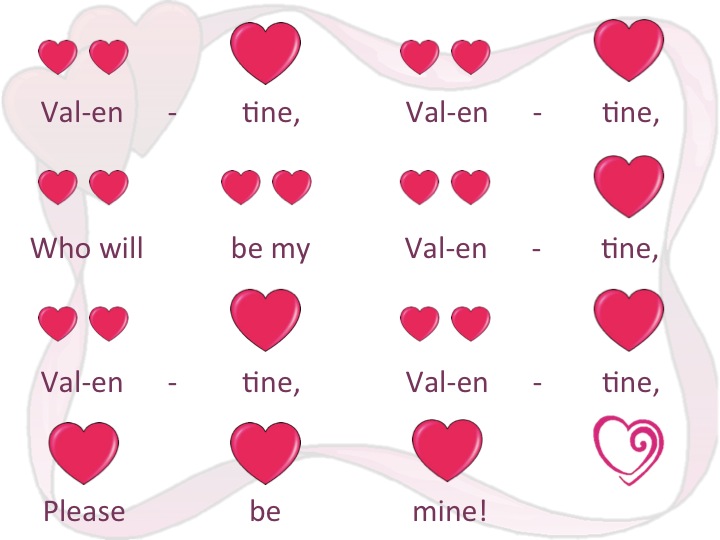
Here's an example of how they would notate the first phrase of "Valentine, Valentine":

They then transfer it to the staff to look like this (I LOVE that these Table Scatters fit so nicely in that FREE staff paper you can pick up at your state conferences!!!):

Here's the second phrase.  It's kind of hard to see, but you can see through the heart that's on the line to see the line go through it (nice reinforcement of "line" vs. "space" notes):

And with my second graders, here's how they would notate the last phrase:

I do have a PowerPoint that I use to teach towards this individual writing.  I wanted to explain something about my PowerPoints.  I make them all with the same format: teaching/reinforcing the known rhythmic concepts and then teaching/reinforcing the known melodic concepts.  I do NOT always use the entire PowerPoint.  This is what I love about PowerPoints: you can easily change the order of the slides to meet your needs. In other words, I have two versions of this PowerPoint: one to meet the needs of my first graders (that has the beat/rhythm slides and the melodic pattern of the first phrase) and my second graders (that practices the rhythms and has the do preparation slides. . . with us transitioning into using the do practice slides after we present do  and are practicing reading do in known songs.)  

So, here's the PowerPoint:

Lyric slide:

Beat slide:

Rhythm preparation slide:

Ta & ti-ti practice slide with ta rest preparation slide:
Ta rest practice slide:

Ta rest practice with note heads:

These slides are for preparing do:

Text without the staff:


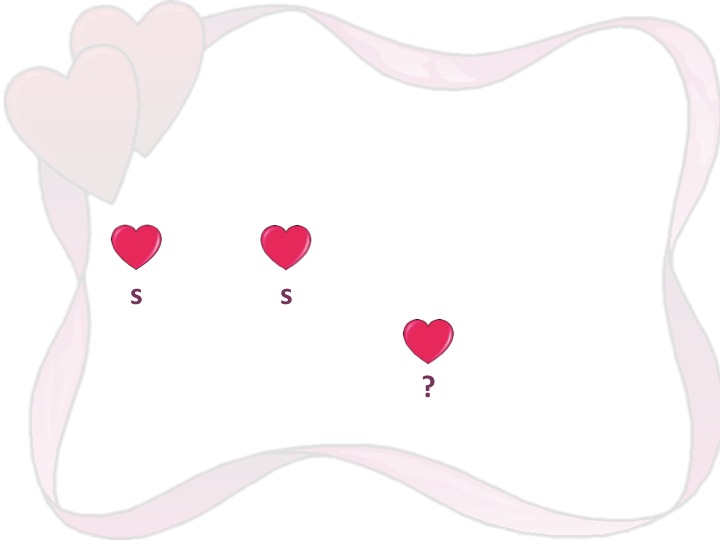
Solfége without the staff:


Text on the staff:

Solfége on the staff:

And then there are the do  practice slides.  These are presented in the same manner as the preparation slides.


Solfa without the staff:


Solfa on the staff:


And then finally reading the "real notes" on the staff with rhythms:


If you have a Dollar Tree in your neighborhood, run out and buy some table scatter hearts!!!  There are many more used for them then just this song!  And if you'd like my PowerPoint, it's available at my Teachers Pay Teachers store.

1
Back to Top